
Podiatry Services at Victoria Park Podiatry
At Victoria Park Podiatry, our degree-qualified podiatrists help people of all ages with foot, ankle and lower-limb problems — from everyday aches through to sports injuries and complex conditions. Whether you’re on your feet all day, getting back into exercise, or you simply want healthier nails and skin, we’ll build a practical plan that fits your lifestyle.
We accept private health rebates via HICAPS and welcome Medicare CDM and DVA patients. No referral is required — you can book online at any time.
Heel & Arch Pain
Plantar Fasciitis & Heel Pain
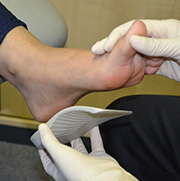
Heel pain is one of the most frequent reasons people visit a podiatrist. A common cause is plantar fasciitis — irritation of the strong tissue band under the foot that supports the arch. Symptoms are often worst with the first steps in the morning, then ease as you warm up, and return after longer periods of standing or walking.
Common signs: pain under the heel, arch tightness, “first-step” pain, and soreness after activity or time on your feet.
How we treat it: detailed assessment, footwear advice, activity guidance, stretching/strengthening, strapping, and orthotics where needed. We can also guide imaging referrals when appropriate.
Achilles Tendon Pain
The Achilles tendon connects the calf to the heel bone and can become painful when it’s overloaded — commonly in runners, court sports, or after a sudden increase in activity. Early treatment can prevent the problem becoming persistent.
Common signs: stiffness first thing in the morning, pain at the back of the heel, tenderness to touch, and discomfort during/after exercise.
How we treat it: load management strategies, progressive strengthening (including calf work), footwear review, taping/brace options, and orthotic support when biomechanics are contributing.
Skin & Nail Conditions
Ingrown Toenail Treatment & Nail Surgery
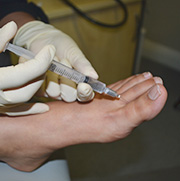
An ingrown toenail occurs when the nail edge presses into the surrounding skin, causing pain, swelling and sometimes infection. It often starts as irritation and quickly becomes harder to manage if left too long.
Common signs: pain on the nail edge, redness, swelling, and (when infected) discharge or heat.
How we treat it: careful removal of the offending nail edge for relief in early cases. If the problem is recurrent, we can perform partial nail avulsion under local anaesthetic in-clinic, with an option to reduce the likelihood of regrowth on that side.
Corns & Callus Removal
Corns and calluses build up when the skin is repeatedly stressed by pressure or friction. Callus tends to be broader and more diffuse, while corns often have a central core that can feel sharp when you walk.
Common signs: thickened hard skin, tenderness under pressure, discomfort in particular shoes, or pain at the ball of foot/heel/toes.
How we treat it: safe removal (debridement), then we address the “why” — footwear changes, padding, offloading, and orthotics where biomechanics are driving the problem.
Fungal Nails (Onychomycosis)
Fungal nail infection can cause nails to thicken, discolour and crumble. It’s common, stubborn, and easier to treat when addressed early — especially before the nail becomes very thick.
Common signs: yellow/brown/white colour change, thick nails, debris under the nail, brittle edges, and sometimes discomfort in shoes.
How we treat it: nail thinning/debridement to improve penetration, topical treatment plans, hygiene and footwear guidance, and referral pathways when medical therapy is indicated.
Plantar Warts (Verruca)
Plantar warts are caused by HPV and often appear as rough lesions on the sole that can feel like you’re stepping on a pebble. They can spread, particularly in warm, moist communal environments.
Common signs: a rough growth on the sole, pain with direct pressure, tenderness when squeezed from the sides, and small dark dots within the lesion.
How we treat it: tailored care based on location, size and patient age — with options ranging from topical treatments and offloading advice through to in-clinic procedures when appropriate.
Athlete’s Foot (Tinea)
Tinea is a common fungal skin infection, often starting between the toes. It can crack the skin, itch or burn, and may recur if footwear and moisture factors aren’t addressed.
How we treat it: diagnosis and targeted topical treatment, plus practical prevention strategies (sock/footwear guidance, moisture control, and reducing reinfection risk).
Cracked Heels
Heel fissures occur when dry, thickened skin splits under load. Deep cracks can become painful and may be risky for people with diabetes or poor circulation.
How we treat it: removal of excess hard skin, evidence-based skincare guidance (including urea creams), padding/offloading, and orthotics when heel loading is a driver.
Biomechanics & Structural Conditions
Custom Orthotics
Custom orthotics are prescription insoles designed for your feet and your condition. They can reduce strain, improve alignment and redistribute pressure — particularly when pain is linked to the way you walk, stand or run.
Our process: assessment and gait review, discussion of your footwear and daily demands, then a scan or impression for fabrication. Fitting and follow-up ensures comfort and proper function in your chosen shoes.
Flat Feet & High Arches
Foot posture varies from naturally low arches through to high arches. Symptoms can appear as foot fatigue, ankle pain, shin discomfort, or knee/hip aches — especially with higher training loads or long days on your feet.
How we treat it: assessment, strengthening guidance, footwear recommendations, and orthotic support when needed. For children, we focus on whether intervention is required or whether development is on track.
Bunions & Big Toe Joint Pain
Bunions (hallux valgus) develop when the big toe shifts toward the second toe and the joint becomes prominent. They can be influenced by genetics, footwear and mechanics.
How we treat it: footwear strategies, padding and toe devices, joint offloading, and orthotics where appropriate. If surgery is needed, we can guide referral options.
Morton’s Neuroma & Forefoot Pain
Neuroma pain is often described as burning, tingling or a “bunched sock” feeling in the forefoot — commonly between the third and fourth toes. Narrow shoes and repetitive compression can aggravate it.
How we treat it: footwear changes, padding/offloading, orthotics, and escalation pathways if symptoms don’t settle.
Sports & Lower Limb
Sports Podiatry & Running Assessments
If you run, play field/court sports, or you’re returning to exercise after time off, a biomechanical review can identify load and technique factors that commonly lead to injury.
We help with: training-load guidance, gait assessment, footwear review, taping/strapping, orthotics when indicated, and step-by-step return-to-sport plans.
Shin Pain (Shin Splints)
Shin splints (medial tibial stress syndrome) often appear when training volume increases too quickly or when mechanics and footwear aren’t well matched to the load.
How we treat it: load management, strengthening and mobility plans, footwear review, and orthotic support where required.
Ankle Sprains & Foot Injuries
From rolled ankles to forefoot sprains, tendon pain and stress injuries — prompt assessment improves recovery and reduces the risk of ongoing instability.
How we treat it: diagnosis, offloading/brace advice, rehab programming, and referral for imaging when needed.
Specialist Care
Diabetic Foot Checks
Diabetes can reduce sensation and circulation in the feet, increasing the risk of unnoticed wounds. Regular checks help catch issues early and prevent complications.
Our assessment may include: circulation checks, sensation testing, skin and nail review, footwear advice and personalised foot-care education.
Children’s Podiatry
We assess and treat common childhood concerns such as flat feet, in-toeing/out-toeing, heel pain during growth spurts, toe walking, and sports-related strains.
Our approach: age-appropriate assessment, reassurance when normal development is occurring, and clear treatment plans when support is needed.
Medical Pedicures
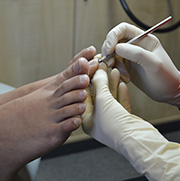
A medical pedicure at Victoria Park Podiatry is performed by degree-qualified podiatrists in a clean, clinical environment. It focuses on comfort, skin health and nail care — not cosmetic polish.
It can include hard-skin removal, corn/callus care, nail trimming and reshaping, cuticle care, and targeted advice for recurring issues.
General Foot Care
Routine care keeps feet comfortable and healthy — particularly for older adults, people with diabetes, and anyone who finds nail and skin care difficult.
Health Fund Rebates & Medicare
Private health rebates can be claimed on the spot via HICAPS. If you have a Chronic Disease Management (CDM) plan from your GP, Medicare rebates may apply. We also welcome DVA patients.
Ready to Book?
Book online any time, or contact our clinic on (08) 9355 0894. New patients are always welcome.